


 Talk to us
Understanding Different Types of Portfolio Management Services
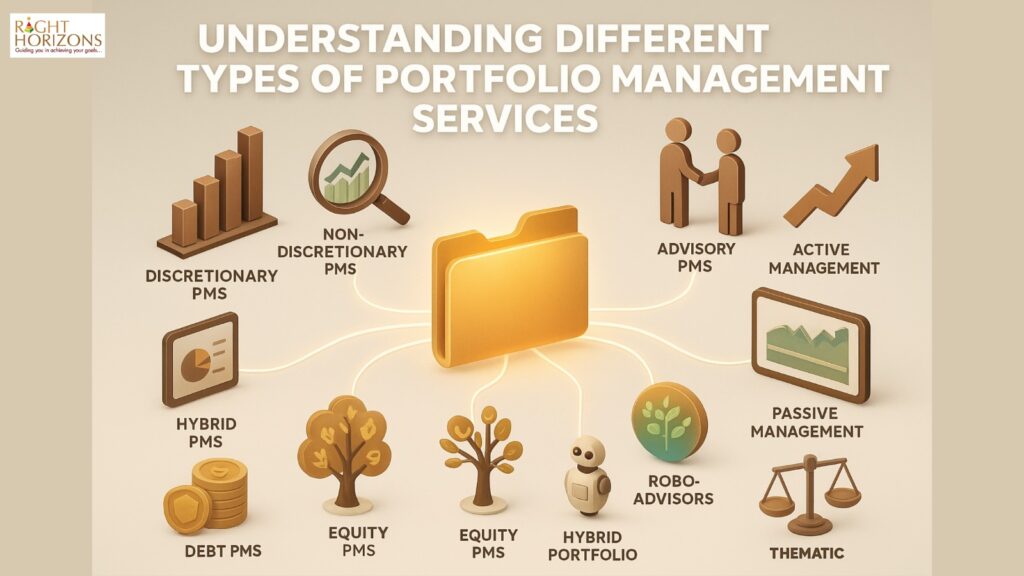

Classification by Investment Decision-Making Authority
The most common way to categorize portfolio management services is by who makes the investment decisions. This classification directly impacts how involved you’ll be in your investment strategy. For investors looking at different risk profiles, you might consider whether you’re a conservative investor, aggressive investor, or risk taker.
Discretionary Portfolio Management Services
With discretionary PMS, your portfolio manager has complete authority to make investment decisions without seeking your approval for each trade. Think of it like hiring a chef who plans the menu, shops for ingredients, and cooks without asking you about every ingredient.
Best suited for:
- Busy professionals who lack time to monitor markets
- Investors who prefer a hands-off approach
- Those who trust their manager’s expertise completely
Non-Discretionary Portfolio Management Services
Non-discretionary PMS operates more like a collaborative partnership. Your manager provides investment recommendations, but you retain the final say before any trades are executed. It’s similar to having a financial advisor who presents options but waits for your approval.
Ideal for:
- Investors who want to stay actively involved
- Those with market knowledge who value professional input
People who prefer maintaining control while using expertise
Advisory Portfolio Management Services
With advisory PMS, you’re essentially hiring a consultant. The manager provides advice and recommendations, but you make all final decisions and execute trades yourself. You might wonder – why choose this over doing it alone? The answer lies in accessing professional research and market insights while maintaining complete autonomy.
Perfect for:
- Experienced investors with strong market knowledge
- Those who want expert opinions but prefer self-execution
- Entrepreneurs who enjoy being hands-on with investments
When comparing different service types, you might want to understand the PMS vs mutual funds debate to see which option aligns better with your investment goals.
Management Style Classifications
| Management Style | Strategy | Risk Level | Typical Returns |
|---|---|---|---|
| Active Management | Frequent trading, market timing | Higher | Potentially higher |
| Passive Management | Index tracking, minimal trading | Lower | Market-level returns |
Asset Class-Based Portfolio Management Types
You might also wonder about the types of investments these services focus on:
Equity Portfolio Management Services
- Focus: Listed and unlisted stocks
- Goal: Capital appreciation
- Risk: Higher volatility
- Suitable for: Growth-oriented investors with higher risk tolerance
Debt Portfolio Management Services
- Focus: Bonds, debentures, fixed-income securities
- Goal: Capital preservation and regular income
- Risk: Lower volatility
- Suitable for: Conservative investors prioritizing stability
Hybrid Portfolio Management Services
- Focus: Balanced mix of equity and debt
- Goal: Risk-adjusted returns
- Risk: Moderate
- Suitable for: Investors seeking balanced approach
Learn more about creating a balanced portfolio and investment diversification techniques for optimal results.
Thematic Portfolio Management Services
- Focus: Sector-focused or investment themes
- Examples: ESG investing, technology sectors, healthcare
- Suitable for: Investors with targeted preferences or convictions
For those interested in sector-specific approaches, explore Right Horizons’ focus sectors and understand sector-specific risk analysis.
Modern Portfolio Management Innovations
Technology has introduced robo-advisors as a cost-effective alternative to traditional PMS. These algorithm-driven services automate portfolio construction and rebalancing, making professional management accessible at lower minimum investments.
Custom or personalized PMS represents the premium tier, where every aspect – from asset allocation to ethical filters – is designed to meet your requirements.
Important Considerations When Choosing Portfolio Management Services
Before selecting a PMS type, consider these important factors:
- Investment minimums: Most services require substantial initial investments
- Fee structures: Active management typically costs more than passive approaches
- Reporting frequency: Look for transparent, regular performance updates
- Tax optimization: Confirm your manager considers tax implications
- Risk tolerance: Match the service type to your comfort level
Understanding misconceptions about PMS risk and learning about risk management in portfolio management can help you make better decisions. Additionally, consider PMS lock-in periods and exit strategies before committing.
Practical Next Steps
To choose the right portfolio management service:
- Assess your involvement preference: Do you want hands-on control or prefer delegating decisions?
- Evaluate your risk tolerance: Are you comfortable with market volatility for potentially higher returns?
- Determine your investment timeline: Long-term goals might suit passive strategies, while short-term objectives may benefit from active management
- Research providers: Compare track records, fees, and service offerings. Learn how to choose a consistent PMS scheme and how to select a top-performing portfolio management service
- Consider starting small: Some providers offer lower minimums for new clients
For additional guidance, explore our comprehensive resources on wealth management tips for families and investment strategies for risk mitigation. You can also take advantage of our free portfolio scan to assess your current investments.
Remember, the best portfolio management service aligns with your financial goals, risk appetite, and desired level of involvement. Whether you choose discretionary, non-discretionary, or advisory services, confirm your provider offers transparency, regular communication, and a proven track record in your preferred investment approach.